






In an increasingly dynamic and competitive global market, understanding the macro-environmental factors influencing an organization has never been more critical. This is where PESTLE comes into play. PESTLE an acronym for Political, Economic, Social, Technological, Legal, and Environmental—offers a structured framework to assess external influences that impact business strategies and operations.
PESTLE Training Courses are designed to help professionals apply this analysis effectively within various business functions, from planning and forecasting to risk management and organizational transformation. This comprehensive guide explores what PESTLE is, its practical applications in modern business, and how professionals can benefit from enrolling in pestle analysis training courses. While the featured courses do not exclusively focus on PESTLE, they incorporate it as a vital component of broader strategic and operational skill-building.
What is PESTLE Analysis?
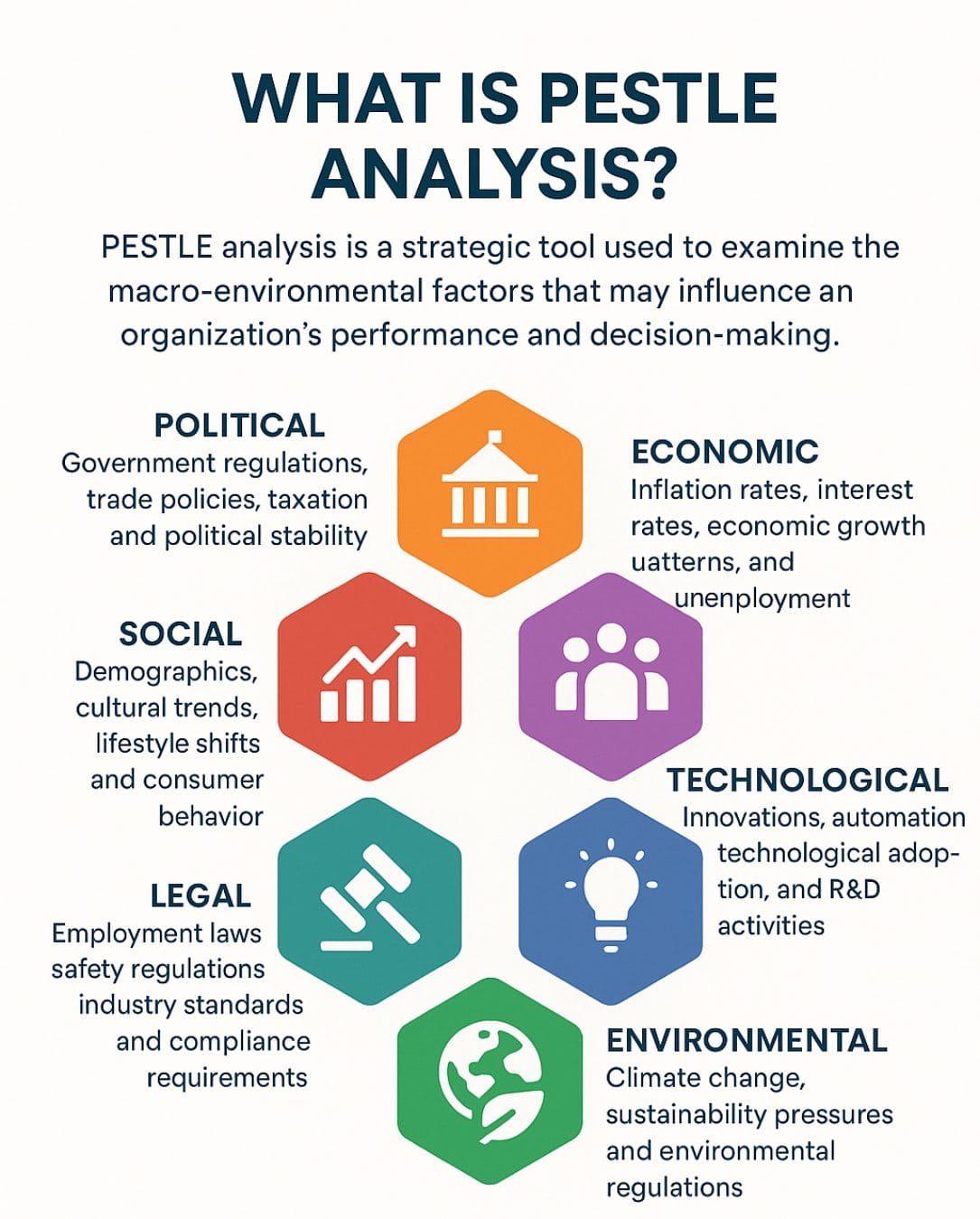
PESTLE analysis is a strategic tool used to examine the macro-environmental factors that may influence an organization’s performance and decision-making. Each component of PESTLE allows professionals to systematically consider the broader context in which a business operates:
- Political: Government regulations, trade policies, taxation, and political stability.
- Economic: Inflation rates, interest rates, economic growth patterns, and unemployment.
- Social: Demographics, cultural trends, lifestyle shifts, and consumer behavior.
- Technological: Innovations, automation, technological adoption, and R&D activities.
- Legal: Employment laws, safety regulations, industry standards, and compliance requirements.
- Environmental: Climate change, sustainability pressures, and environmental regulations.
Professionals who undergo pestle analysis training courses learn how to apply this model to real-world scenarios. It supports holistic thinking and prepares leaders to anticipate challenges, capitalize on emerging trends, and formulate robust business strategies.
Recommended PESTLE Training Courses
While not exclusively dedicated to PESTLE, the following courses embed it as a key component to drive strategic thinking and informed decisions:
1. Change Management: Building High-Performing Teams Course
This course equips professionals with the tools to navigate organizational change effectively. PESTLE is used to assess external change drivers, allowing leaders to shape team culture and organizational direction.
Highlights:
- Understand the external environment using PESTLE analysis
- Lead teams through transformation and uncertainty
- Build a resilient, high-performance organizational culture
- Apply structured change models for sustainable impact
2. Corporate Financial Management & Accounting Course
Financial leaders need to assess market and economic risks. This course integrates PESTLE analysis as part of strategic financial planning, offering a broader view of influencing macro factors.
Highlights:
- Integrate PESTLE into financial risk assessments
- Analyze economic trends and policy shifts
- Strengthen budgeting, capital structure, and investment strategy
- Enhance decision-making through external environment analysis
3. Mergers & Acquisitions Course
This course provides a strategic view of merger and acquisition processes. PESTLE analysis is incorporated to evaluate political, legal, and economic variables impacting deal viability.
Highlights:
- Use PESTLE to assess cross-border acquisition risks
- Evaluate regulatory and political stability in target markets
- Incorporate social and environmental due diligence
- Drive informed investment and negotiation decisions
4. Total Logistics Management Course
This comprehensive training course includes PESTLE as a framework for analyzing supply chain disruptions and opportunities. It is essential for professionals seeking to future-proof logistics operations.
Highlights:
- Apply PESTLE to evaluate global logistics challenges
- Forecast technological and regulatory impacts
- Develop sustainable and resilient logistics strategies
- Optimize supply chains by assessing macro-environmental risks
By enrolling in these dynamic pestle analysis training courses, professionals develop the strategic foresight needed to stay ahead in complex markets. Whether you’re steering organizational change, managing finances, evaluating acquisitions, or leading logistics, PESTLE offers the clarity and perspective required for informed decisions.
Benefits of Enrolling in PESTLE Analysis Training Courses
Understanding the external environment is essential for making informed, strategic decisions. PESTLE analysis training courses offer several advantages that contribute to both individual and organizational development:
- Strategic Clarity: By evaluating external forces, professionals can align organizational goals with current market conditions and long-term trends.
- Improved Risk Management: PESTLE helps identify potential risks early, allowing for proactive mitigation strategies.
- Informed Planning: Whether launching a new product or entering a new market, PESTLE ensures that plans are grounded in reality.
- Agility and Adaptability: Organizations that integrate PESTLE into decision-making become more adaptable to sudden external shifts.
- Cross-Functional Application: From finance and HR to operations and logistics, the PESTLE framework is applicable across all business functions.
Professionals who complete pestle training courses are equipped with the skills to interpret the global business environment, enhance resilience, and drive competitive advantage.
Common Uses of PESTLE Analysis in Business
PESTLE analysis is not just a theoretical concept—it has a wide range of practical applications across industries. PESTLE analysis courses introduce learners to its diverse use cases, including:
- Strategic Planning: Informing short- and long-term organizational strategies.
- Market Entry & Expansion: Evaluating the feasibility and timing of market entry initiatives.
- Change Management: Identifying external factors driving change and aligning internal responses.
- Investment Analysis: Assessing the macroeconomic and regulatory context of financial decisions.
- Supply Chain & Logistics: Understanding global disruptions and planning resilient logistics frameworks.
- Mergers & Acquisitions: Evaluating political, legal, and economic risk in target markets.
In pestle analysis courses, professionals learn how to embed this framework into their day-to-day operations and decision-making models, enabling better forecasting and adaptability.
Why You Should Choose the PESTLE Analysis Courses
The best pestle analysis courses are designed with practical business needs in mind. These courses blend theoretical knowledge with real-world case studies, practical tools, and interactive learning methods. Here’s what sets high-quality PESTLE training apart:
- Relevance to Today’s Market: Courses address current global challenges, such as economic instability, climate change, and regulatory reforms.
- Expert Instruction: Delivered by seasoned professionals who bring real industry insights to the classroom.
- Actionable Skills: Participants leave with a clear understanding of how to apply PESTLE to their specific roles.
- Cross-Industry Focus: Whether in finance, logistics, or HR, PESTLE analysis adds strategic value across the board.
- Professional Development: Adds weight to your resume and enhances your ability to contribute to organizational success.
Investing in a pestle training course is a smart move for professionals looking to build strategic thinking capabilities and respond effectively to external change.
Frequently Asked Questions (FAQs)
Q1: What does a PESTLE analysis training course typically cover?
PESTLE training courses typically cover the six key dimensions of the model—Political, Economic, Social, Technological, Legal, and Environmental. They explore how these external factors influence business operations and teach participants how to use the framework for strategic planning, risk assessment, and business forecasting.
Q2: Who should take pestle analysis training courses?
These courses are ideal for managers, analysts, consultants, project leaders, and anyone involved in strategic decision-making, business planning, market analysis, or risk management.
Q3: Are pestle training courses industry-specific?
While some courses may focus on specific industries, most pestle training courses are designed to be cross-functional. The skills acquired can be applied in sectors like finance, logistics, marketing, human resources, and more.
Q4: How does PESTLE analysis help in risk management?
PESTLE helps identify external threats—such as regulatory changes or economic downturns—early in the planning cycle. This proactive insight enables organizations to develop contingency plans and mitigate risks effectively.
Q5: Is PESTLE analysis still relevant today?
Absolutely. In today’s unpredictable global landscape, organizations must continuously evaluate external pressures. PESTLE provides a structured method to monitor these dynamics and respond with agility and foresight.
Q6: How long do pestle analysis courses usually last?
Most pestle analysis training courses are short, intensive training courses that span 5 to 10 days. They are designed to deliver impactful learning without requiring long-term time commitments.